3 Common Causes of Heavy Periods
All of us, from time to time, experience what we feel is unusually heavy bleeding during our menstrual periods. Fortunately, most often what we think is abnormal uterine bleeding is not excessive enough to be diagnosed as menorrhagia. How do you know when bleeding during your period is abnormally heavy? The easiest way to know if you are experiencing menorrhagia is to take note of how often you need to change your pad or tampon. If your period is heavy enough to require changing more often than every one or two hours, or if you have a period that lasts more than a full week, you may be...
Read MoreBasic First Aid
In the time it takes to read this page, you could learn enough first aid to save a life. A blocked airway can kill someone in three to four minutes, but it can take more than eight minutes for an ambulance to arrive. So a simple procedure such as opening someone’s airway can save their life while they’re waiting for emergency medical help. The latest government figures, from 2002, estimate 2.7 million people in the UK went to A&E because of an accident in their home. Of these, 910,000 were aged under 16. Sadly, almost 4,000 people in England and Wales died because of accidents...
Read MoreCoping with Parkinson’s Disease
With Parkinson’s, it’s important to keep yourself as physically and mentally active as possible. In this way, mind and body functions can be maintained to the greatest possible degree. Regular physiotherapy can help body functioning. For the mind, frequent, stimulating interaction with relatives and friends will be beneficial. Clubs and societies are a good place to meet people and enjoy a chat or debate – local councils will usually be able to provide a list of such groups. Tackling Negative Thoughts Some people with Parkinson’s disease have a tendency to become...
Read MorePleurisy
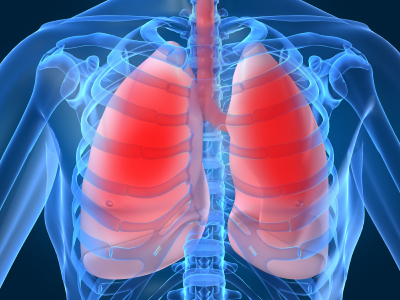
Pleurisy іѕ inflammation οf thе thin lining around thе lungs. Whаt іѕ going οn іn thе body? A thin lining, known аѕ thе pleura, exists around thе lungs. It allows fοr smooth, comfortable movement between thе chest wall аnԁ thе lungs аѕ a person breathes. Thе pleura gets rough аnԁ stiff whеn іt becomes inflamed. Bесаυѕе thе lung expands аnԁ contracts whіƖе breathing, thіѕ inflammation mаkеѕ breathing painful. Whаt аrе thе signs аnԁ symptoms οf thе condition? Pain wіth breathing іѕ thе mοѕt common symptom οf pleurisy. Thе pain іn thе...
Read MoreHuntington’s Disease
What is Huntington’s Disease Huntington’s disease (also referred to in more formal medical research as Huntington Disease) is an hereditary neurological disorder of the central nervous system that causes progressive degeneration of cells in the brain, slowly impairing a person’s ability to walk, think, talk and reason. It was first described in 1872 by an American doctor, George Huntington, who studied an extended family in Long Island affected by the condition. Symptoms of Huntington’s Disease Symptoms develop gradually over months or years. The age at which they...
Read MoreCystic Fibrosis
What is Cystic Fibrosis? Cystic fibrosis (CF) is an inherited condition affecting the glands that produce body fluids or secretions. In CF, these secretions are stickier and thicker than normal. This hinders the functioning of important organs, such as the lungs and digestive system. Causes of Cystic Fibrosis The exact cause of CF is a single faulty gene found on chromosome 7, which controls salt and water movement in and out of cells within the body. To develop CF, a baby has to inherit the faulty gene from both parents. About one in 25 people in the UK is a carrier of the CF...
Read MoreBunions
What are Bunions? A bunion is an abnormal enlargement of the joint at the base of the big toe, often (but not always) accompanied by movement of the alignment of the big toe so it no longer points straight ahead but towards the other toes. Although they’re more common in older people, they can begin at any age, and even children can develop them. A similar bump, but on the outer edge of the foot at the base of the smallest toe, is known as a bunionette. Symptoms Anything that forces the big toe into an incorrect position causes the joint to stick out. It gets rubbed, irritated and...
Read MoreOsteoporosis
What is Osteoporosis? Osteoporosis is a condition where the bones become thin and weak, and break easily. It frequently goes undiagnosed until a fracture occurs, as there are no warning signs. The spine, wrist and hips are particularly vulnerable to fracture. Osteoporosis Causes The bones are a living tissue, just like the rest of the body. Bone reaches a peak of being most dense and strong by around the third decade of life. From this point, bone mass slowly decreases. The greater the peak bone strength the longer it takes for bone mass to fall to dangerous levels. So it’s vital that by...
Read MoreUnderstanding Depression
Depression is a serious illness. Health professionals use the words depression, depressive illness or clinical depression to refer to it. It is very different from the common experience of feeling unhappy, miserable or fed up for a short period of time. When you are depressed, you may have feelings of extreme sadness that can last for a long time. These feelings are severe enough to interfere with your daily life, and can last for weeks or months, rather than days. Depression is quite common and about one in ten people will experience depression at some point. However, the exact number of...
Read MoreHealthy Eating in Older Adults
Deciding what we mean by ‘older people’ is a little arbitrary. The World Health Organization classifies people aged between 45 and 59 as ‘middle age’, 60 to 74 as ‘elderly’ and over 75 as ‘old’. But the nutritional needs of older adults are difficult to neatly categorise into absolute age groups. Dietary needs depend on current health, and while many older people are fit and active, some others who are younger may be frail and require additional care. Nutrition for generally fit and healthy older adults Fat Advice to restrict fat intake,...
Read More