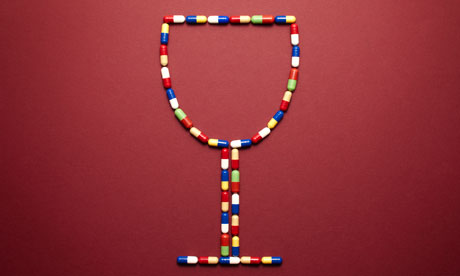
4 Ways to Be Safer
Are you prepared if there is an emergency in your community? The National Safety Council, American Heart Association and American Red Cross have teamed up to sponsor National Safety Month. These organizations want you to focus on four important safety topics this June: 1. Emergency Preparedness 2. Distracted Driving 3. Poisoning Prevention 4. Falls Prevention Why? Emergency Preparedness: “CPR/AED applied within minutes of a heart attack doubles the chance of survival.” This statistic is reason enough to get trained in CPR/AED (which stand for cardiopulmonary resuscitation and automatic...
Read MoreThe Surprising Second Leading Cause of Death in the U.S.
In a study published in the May issue of the American Journal of Preventive Medicine, researchers came to a surprising conclusion: hospitalizations for poisoning by prescription medication has increased by 65 percent from 1999 to 2006. The rates of unintentional poisoning– from prescription opioids, sedatives and tranquilizers in the U.S. has surpassed motor vehicle crashes as the leading cause of unintentional injury death. Simply put, this means that poisoning from prescription drugs is now the second leading cause of unintentional injury death in the U.S. “Deaths and hospitalizations...
Read More8 Types of Cancer Linked to Rheumatoid Arthritis
If you have rheumatoid arthritis (RA), you may be at risk for certain cancers due to medication—or RA-related inflammation itself. The best thing you can do is to be aware, but don’t worry excessively. “The risk of all of these is very, very low,” says Stanley Cohen, MD, clinical professor of internal medicine at the University of Texas Southwestern Medical School and co-director of the division of rheumatology at Presbyterian Hospital, in Dallas. “When you look at the numbers, the relative risk is higher but the actual risk is low.” RA has even been linked to...
Read More4 Surprising Reasons Women Can’t Lose Weight
Written by Jennifer Benjamin from www.Health.com If you’re doing everything “right” and can’t seem to lose weight, you may have a hidden health condition. Most of us already know that eating less and moving more are the keys to dropping extra pounds. But if you’re already doing everything “right” and can’t seem to lose weight – or are even gaining it – you may have a hidden health condition that’s sabotaging your efforts. And the symptoms may be so subtle that even your doctor can miss them. Here, some possible weight-loss...
Read MoreShingles
Everyone who has had chickenpox is at risk of developing shingles, which is caused by the same herpes virus. The first sign of shingles is usually excessively sensitive, tingling or burning skin where the shingles rash subsequently appears. The area is often painful. At the same time, you may experience fever, headache and enlarged lymph nodes. After a few days, the characteristic shingles rash appears as a band or patch of red spots on the side of the trunk or face. It usually appears on one side only. The rash develops into fluid-filled blisters that then collapse, forming small ulcers....
Read More5 Easy Health Tweaks
Dr. Oz, Oprah´s favorite doctor, has some great advice on small tweaks you can easily make that will have a big impact on your life. 1. Make the Hard Decisions in the Grocery Store The reason diets don’t work, Dr. Oz says, is because they are based on willpower. If you’re rummaging in the fridge at 10 p.m. on a Sunday, anxious about work Monday, there is no way (no way!) you will say no to a chocolate bar. But if there is no chocolate bar nearby, you can’t do something you’ll later regret. To make sure your pantry is filled with healthy items, go grocery shopping...
Read MoreAntibiotics and Alcohol
Question: Antibiotics and alcohol: Should I avoid mixing them? What are the effects of drinking alcohol while taking antibiotics? Some antibiotics carry a warning to avoid alcohol. But others don’t. Answer: From James M. Steckelberg, M.D. The effects of combining antibiotics and alcohol can vary, depending on the specific antibiotic. Alcohol doesn’t diminish the effectiveness of most antibiotics. However, antibiotics and alcohol can cause similar side effects, such as stomach upset, dizziness and drowsiness. When you combine antibiotics and alcohol, these side effects may...
Read MoreThe Five Steps of a Breast Self-Exam
Taking a few minutes to do a breast self-exam a minimum of once a month can make a lifetime of difference. Nearly 70% of all breast cancers are found through self-exams and with early detection the 5-year survival rate is 98%. If you find a lump, schedule an appointment with your doctor, but don’t panic—8 out of 10 lumps are not cancerous. For additional peace of mind, call your doctor whenever you have concerns. Step 1: Begin by looking at your breasts in the mirror with your shoulders straight and your arms on your hips. Here’s what you should look for: Breasts that are...
Read More3 Common Causes of Heavy Periods
All of us, from time to time, experience what we feel is unusually heavy bleeding during our menstrual periods. Fortunately, most often what we think is abnormal uterine bleeding is not excessive enough to be diagnosed as menorrhagia. How do you know when bleeding during your period is abnormally heavy? The easiest way to know if you are experiencing menorrhagia is to take note of how often you need to change your pad or tampon. If your period is heavy enough to require changing more often than every one or two hours, or if you have a period that lasts more than a full week, you may be...
Read MoreIrritable Bowel Syndrome (IBS)
Irritable bowel syndrome, or IBS, causes a variety of unpleasant abdominal symptoms. Irritable bowel syndrome (IBS) is the most common gut condition and affects about one in ten people at some time. It is most common among people aged between 25 and 45 but can cause problems at any age. Women are more often affected than men. The symptoms of IBS include: Abdominal pain, bloating and wind Diarrhoea or constipation, or episodes of both Passing mucus when you open your bowels A feeling of incomplete emptying of the rectum Nausea and vomiting Depression, anxiety and stress Other possible...
Read More